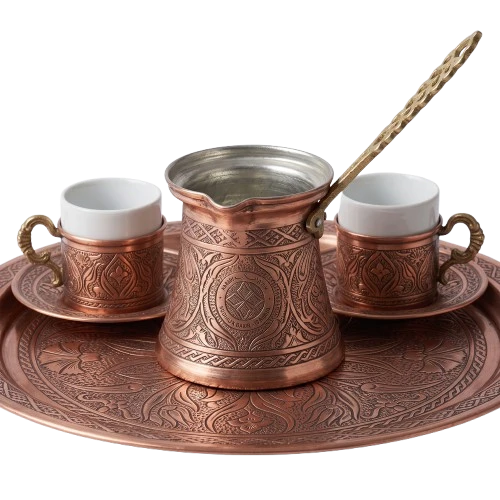
A copper pan does not improve every dish. You see the difference in the jobs where it matters that the heat is the same everywhere in the pan; there is no point paying for copper to boil pasta water.
What even heat actually means
In a stainless steel pan there can be 30 to 40 degrees between the spot above the flame and the edge. That hot spot is where a sauce catches, where milk sticks, where one side of the flour browns before the rest. Copper moves heat sideways so fast that the whole base sits at practically one temperature.
Thickness matters too. Below 1 mm the advantage fades; for cooking pans we work with sheet of 1.5 to 2 mm.
The reverse is just as useful: copper cools quickly. A steel pan carries on cooking for three or four minutes after you turn the heat off, copper settles in half a minute. Turn it down and it really is down.
Jam, syrup, caramel
Preserve makers did not fall for copper by accident. Sugar syrup sets between 105 and 115 C and the caramel threshold sits just above it; a single hot spot gives the whole batch a burnt smell. In a wide copper pan the water evaporates fast, the fruit reaches setting point quickly and the colour holds.
The same logic covers syrup desserts, caramel, Turkish delight and milk puddings. Cooking a custard in copper, you can slow the stirring down, because nothing curdles at the bottom.
Do not leave the jam standing in the pan. Jar it while it is hot.
Long, slow dishes
Beans, chickpeas, meat stews, casseroles, anything that sits on a low flame for an hour or more does well in copper. Less water escapes, nothing catches, you stir less. Rice too: while it rests, the pan spreads the heat evenly and the grains at the top match the ones at the bottom.
Delicate work benefits as much. White sauces, hollandaise, melting chocolate: the temperature never jumps away from you.
What does not belong in copper
The limit is set by the tin, not by the copper.
- Deep frying and high-heat searing. Tin softens above 200 C, hot oil runs to 190 C and the metal under it is hotter still. Fry in steel or cast iron.
- Heating an empty pan. Two minutes on a big flame takes an empty copper base past 300 C and the lining blisters.
- Storing acidic food. Cooking tomatoes, lemon or vinegar is fine; leaving them in the pan for hours is not. Move the food to another container.
- The dishwasher. Alkaline detergent plus a 70 C drying cycle finishes off both the lining and the shine.
Habits that make it last
No metal spoons, whisks or sharp-edged spatulas on a tinned surface. Tin is far softer than copper; a metal edge scores it, and under the score the copper is bare. Wood and silicone are enough.
Serve the food out of the pan rather than keeping it there. A tinned pan lasts somewhere between five and fifteen years depending on use, and when the tin thins and copper starts to show through, it gets re-tinned rather than thrown away. In Kahramanmaraş that trade is still alive.
If you want the short list: jam, syrups, milk puddings, caramel, dried pulses, stews, rice and delicate sauces. Frying and long contact with acid stay outside it.