Copper Turkish Coffee Pots (Cezve)


TOPTANBAKIR
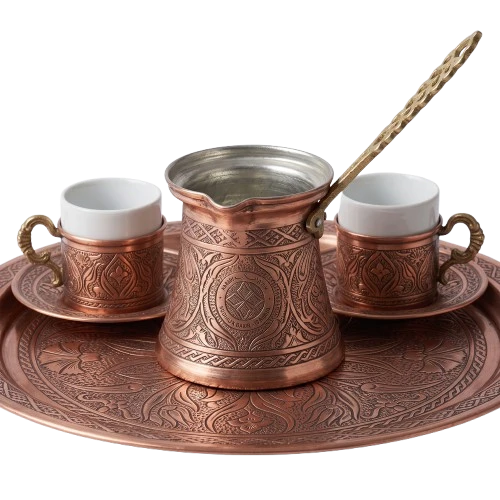
Erzincan Hand-Engraved Bulbous Copper Cezve Set of 3 – 8, 6 & 4 Cup
No reviews yet
$85.06$76.5510% off


TOPTANBAKIR
Armoni Copper Cezve with Induction Base, Brass Handle & Wide Bottom – 4 Cup
1.0 (1)
$27.92$26.535% off


TOPTANBAKIR
Armoni Copper Cezve with Induction Base, Brass Handle & Wide Bottom – 3 Cup
No reviews yet
$28.18$26.785% off


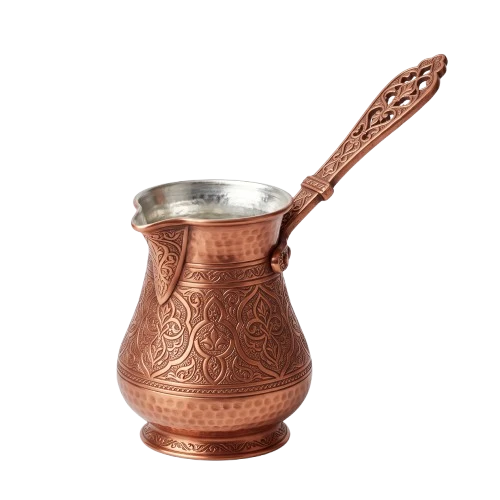
Hand-hammered copper cezve
Our cezve are made in our own workshop in Kahramanmaraş, by hammering a single sheet of copper over a form. The faint hammer marks on the body are absent from machine-pressed pots; no two pieces are exactly alike. The interior that touches the coffee is tin-lined, the traditional method that keeps copper from contacting the brew.
Which size should you buy?
Turkish coffee is measured in cups. A 1-cup cezve holds roughly 90–120 ml, 2-cup 150–200 ml, 4-cup 300–350 ml and 6-cup 450–500 ml. A cezve is never filled to the brim — room is left for the foam to rise. Most households use a 2-cup pot daily and keep a 4–6 cup one for guests.
Use and care
Copper conducts heat quickly and evenly, so the coffee brews over a low flame without catching. Never put a cezve in the dishwasher; wash by hand in warm water with a soft sponge and dry it straight away. The outside darkens naturally over time — that is patina, not a fault. When the inner tin wears, the pot can be re-tinned.