TOPTANBAKIR
Tria Celline Series Natural Textured Melamine Serving Plate, Set of 2 (22 cm)
No reviews yet
$22.61$21.465% off


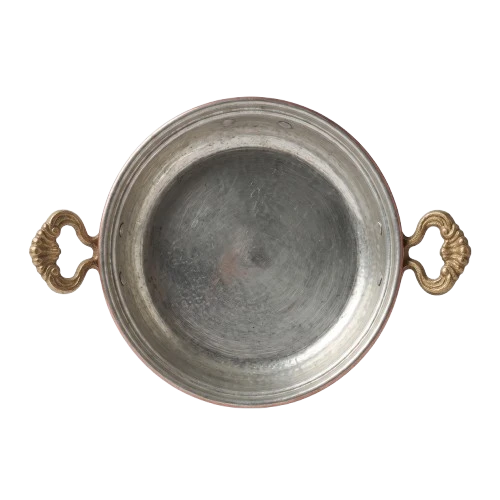
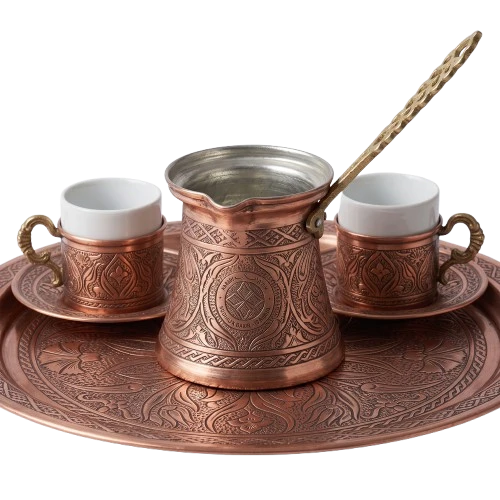
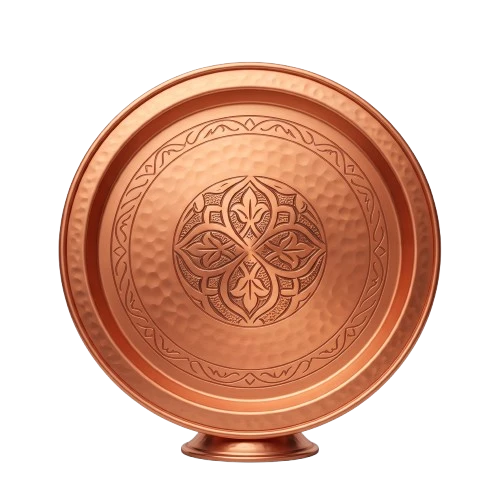
This category covers service plates, boat-shaped dishes, footed stands, nut bowls and meze sets. Each is hammered from a single sheet of copper and every food-contact surface is tin-lined. The tin keeps copper from touching the food, so the pieces are safe on the table.
Small plates of 12–16 cm are for meze, sauces and nuts. From 20 to 26 cm they work as main-course and breakfast plates. Above 30 cm the large platters are meant for rice, dumplings and shared service. Footed models add height to a table setting and suit desserts and dried fruit.
Hot food is fine, but these are serving pieces — never place them on a flame or in the oven. Do not leave acidic foods such as lemon, vinegar or pickles standing on them for long. Wash by hand in warm water and dry immediately; copper left wet will stain. The dark patina on the outside can be brought back to a shine with copper polish if you prefer.