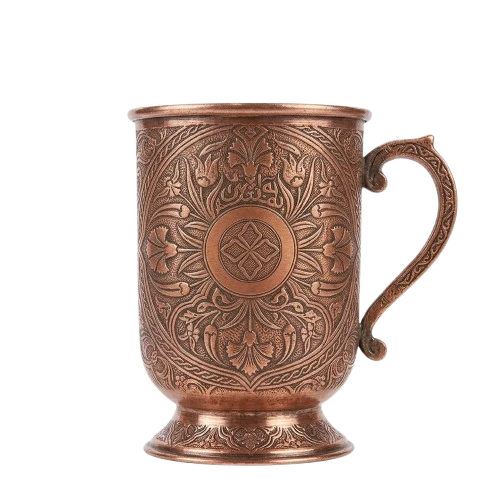
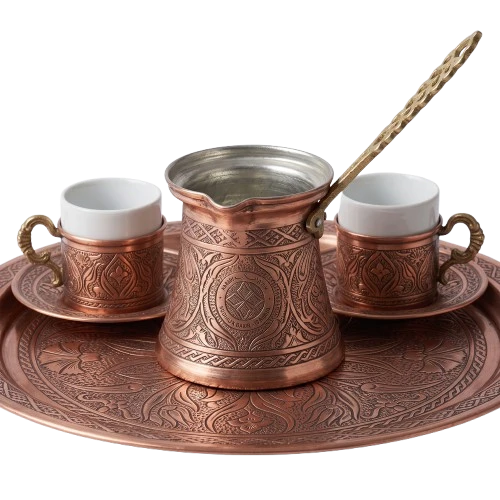
Serving a Moscow mule in copper is not decoration: copper pulls the heat from your hand, the mug stays frosted, and the aroma of mint and lime gathers at the rim. Our tea glasses follow the classic Turkish waisted shape; the water tumblers are straight-sided. Every drink-contact surface is tin-lined.
The drink and the mug arrived together in 1941 and the pairing stuck for a physical reason. Copper takes on the temperature of whatever is in it almost immediately, so a mug straight from the freezer frosts the moment the ginger beer goes in, and the metal keeps the whole surface cold rather than just the base.
Moscow mule mugs hold 450 to 500 ml, which is 15 to 17 fl oz, the standard size for the drink. Water tumblers hold 250 to 350 ml (8 to 12 fl oz) and slim tea glasses 100 to 150 ml (3.5 to 5 fl oz). Copper mugs are made for cold drinks: with a hot drink the body heats instantly and becomes hard to hold, so choose a handled model for tea and coffee.
Health rules in several countries limit copper in direct contact with acidic drinks, and a mule is lime juice over ice. The tin lining settles that question: the drink never touches copper, and the mug still behaves like copper in the hand. An unlined interior on a mule mug means it was not built for the drink it is named after.
A dishwasher kills the shine and wears the tin. Wash by hand in warm water and dry at once. Do not leave acidic drinks such as citrus juice standing in unlined copper. Chill the mugs in the freezer for twenty minutes before serving; that is the whole trick. The natural darkening outside can be polished back if you prefer a bright finish, and a set used every week will want that two or three times a year.

Copper is a trace element the body needs, and a burden in excess. Keeping that balance is exactly what the tin lining does. Acidic food, Ayurvedic copper water and where the limits sit.
Read the article
Why the mug frosts over, how the aroma gathers under the rim, and why the inside has to be tinned. The reason behind the 450 to 500 ml size.
Read the article