Copper Frying Pans & Sahan Dishes


TOPTANBAKIR
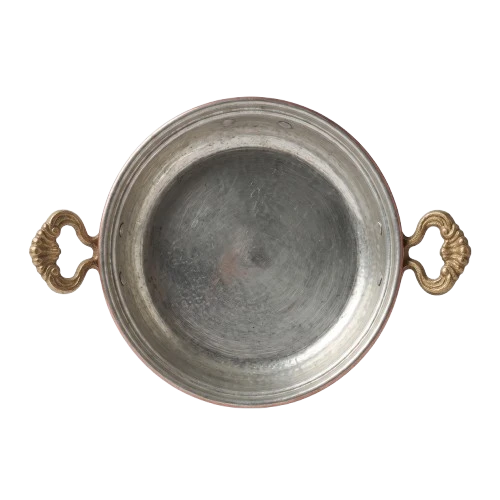
Copper 24 cm Hand-Hammered Sahan / Frying Pan – Brass-Handled, Tin-Lined Egg and Sauté Pan
No reviews yet
$47.85$45.475% off

TOPTANBAKIR
Copper 28 cm Hand-Hammered Sahan / Frying Pan – Brass-Handled, Tin-Lined Egg and Sauté Pan
No reviews yet
$61.14$58.095% off


TOPTANBAKIR
Traditional Handmade Copper Sahan / Pan – Tin-Lined, 18 CM
No reviews yet
$21.94$19.5011% off


TOPTANBAKIR
Traditional Handmade Copper Sahan / Pan – Tin-Lined, 20 CM
No reviews yet
$24.68$22.1010% off


TOPTANBAKIR
Hand-Hammered Copper Sahan 32 cm – Tin-Lined Egg & Sauté Pan with Brass Handle
No reviews yet
$86.40$82.075% off


TOPTANBAKIR
Traditional Handmade Copper Sahan / Pan – Tin-Lined – 16 cm
No reviews yet
$19.39$17.1012% off


TOPTANBAKIR
Hand-Hammered Copper Sahan 20 cm – Tin-Lined Egg & Sauté Pan with Brass Handle
5.0 (1)
$33.24$31.565% off


Copper frying pans and sahan dishes
Copper conducts heat better than any other metal used in the kitchen — roughly twenty times faster than steel. No hot spots form on the surface, so food cooks at the same rate everywhere, and the pan cools the moment you lift it off the heat. That is why professional kitchens still reach for copper. All interiors are tin-lined for food safety.
Pan or sahan?
A sahan is shallow, handled and usually lidded — it goes from stove to table for menemen, eggs with sucuk and single portions. A frying pan is wider and deeper, made for searing and sautéing. Breakfast sahan dishes run 12–18 cm; cooking pans 20–28 cm.
Use and care
Low to medium heat is enough. Never heat an empty pan hard: tin softens at around 230 °C. Use wooden or silicone tools rather than metal. Dishwashers and steel wool wear the tin away. When copper colour starts showing through the interior, the pan needs re-tinning — a service, not a defect.