Most people look at the photo first and the price second. The better starting point is a third question: what is this piece going to do? Go on the stove, sit on a shelf, or leave the house as a gift? Change the answer and the right product changes with it.
Start with the use
Anything going on a burner needs a tin lining, a flat base and riveted handles, and it should not be under 1 mm thick. A decorative piece on a shelf or a wall needs none of that; there the workmanship and the look do the talking, 0.6 to 0.8 mm is enough and the price drops noticeably.
There is a middle group: pieces used now and then, on display the rest of the time. Samovars, ewers, large trays. Buy those tinned as well, because sooner or later somebody puts something in them.
Tinned or untinned
The rule is not subtle: if food or drink touches it, it needs tin. Copper in direct contact with acidic food transfers metal into it, which is neither healthy nor pleasant to taste. Untinned copper makes sense only for dry decorative use, or where copper is just the outer shell.
Getting the size right
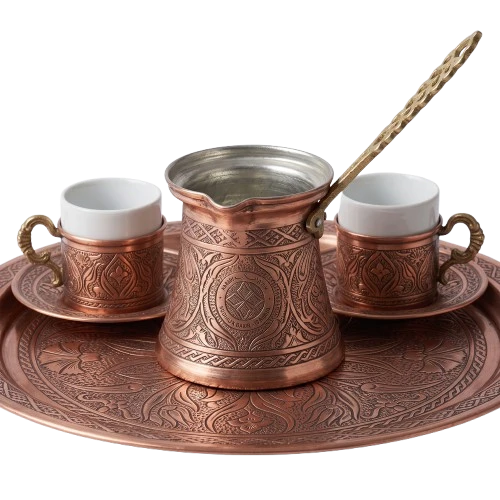
- Coffee pot. 130 ml for one, 220 ml for two, 400 ml for four. Fill to about two thirds; a full pot boils over.
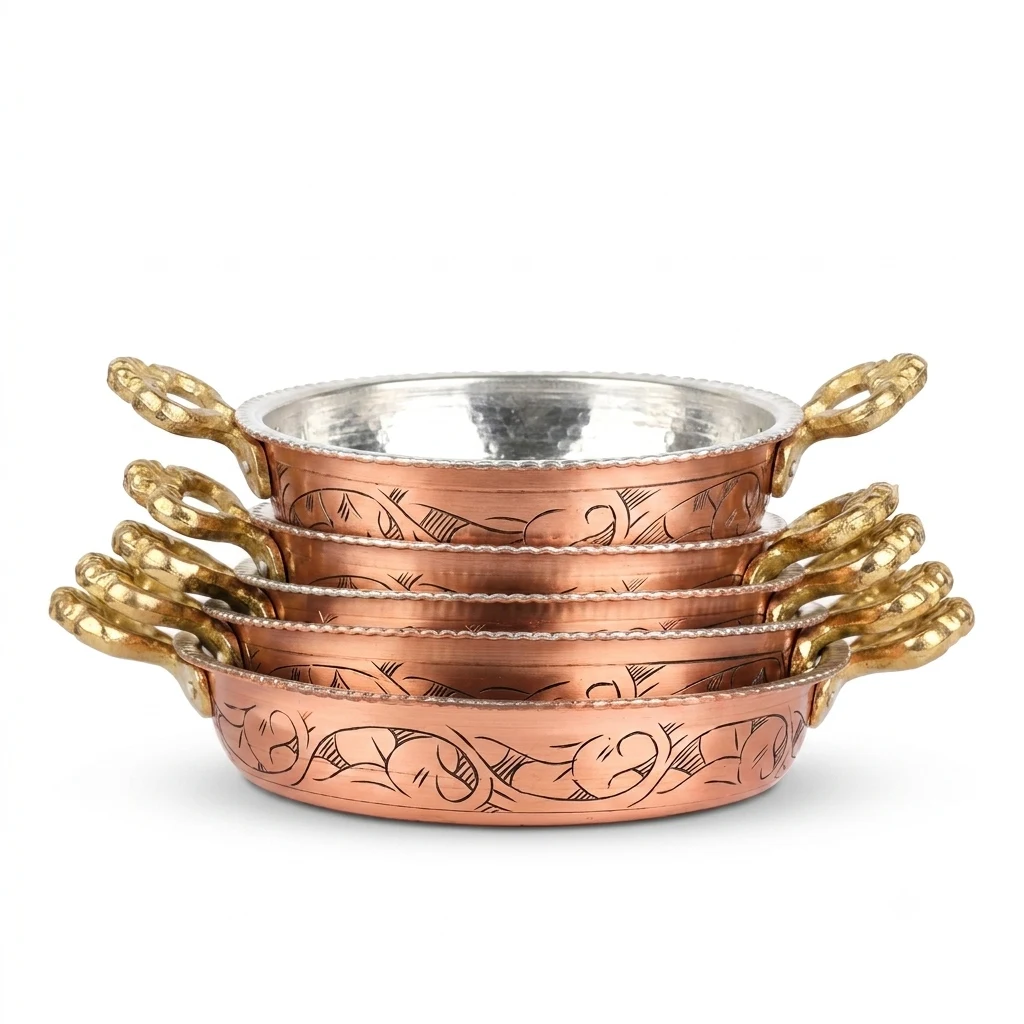
- Pans and pots. 16 to 18 cm for two people, 22 to 24 cm for four, 28 cm for a crowded household.
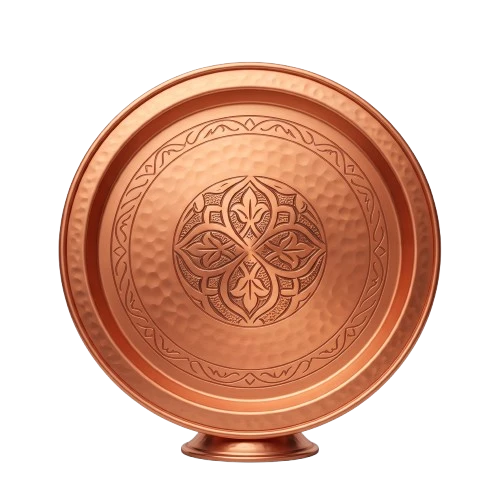
- Trays. 25 to 30 cm for coffee, 40 cm for serving food, 50 cm and up for a wall piece.
- Samovar. At home 3 litres is often more than enough; 5 litres is for large gatherings.
Hand-hammered or machine pressed
A press forces copper into a die: the surface comes out smooth, two pieces are identical and it costs less. In hand work the smith shapes the metal with a hammer, thousands of small marks stay on the surface, the metal compresses and hardens where it was struck. At the same thickness a hammered piece takes more punishment, and it catches light differently.
Bright or antiqued
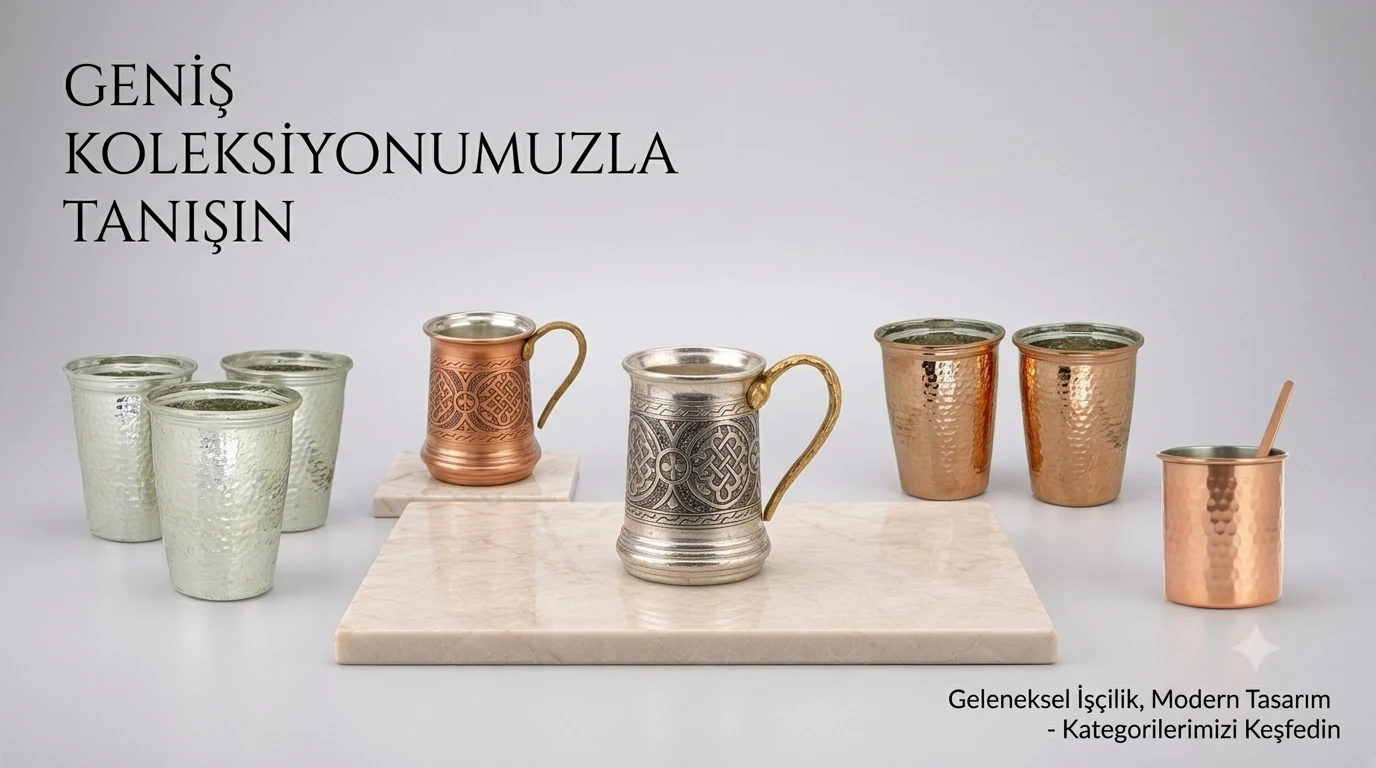
Bright copper is striking on day one, darkens within six months and asks for regular polishing. An antiqued finish is already dark, so it barely changes and needs almost nothing; it sits well with classic furniture. Bright suits a modern kitchen, antiqued suits stone and wood. Between the two there is a brushed matt finish that does not hold fingerprints.
An easy way to tell hammering apart: if the marks are perfectly regular and repeat exactly, the pattern was pressed in. Hand work bunches up in one place and thins out in another.
What the price is made of
Three items: weight, labour, tin. Weight is raw copper cost, so a 1.5 mm tray carries one and a half times the material of a 1 mm one. Labour climbs with hand hammering and engraved patterns. Tin is both a material and a separate working day. When two trays of the same diameter differ threefold in price, one of those three explains it, not the name on the box.
Buying a gift
Keep gifts on the small side, since an oversized piece that never gets used ends up in a cupboard. A 25 cm tray, a two cup coffee set or a lidded sugar bowl fits into any home. Ask whether it comes boxed: copper is heavy, and in a thin box the rim gets dented in transit. If you want a name or a date engraved, order 5 to 7 days ahead.