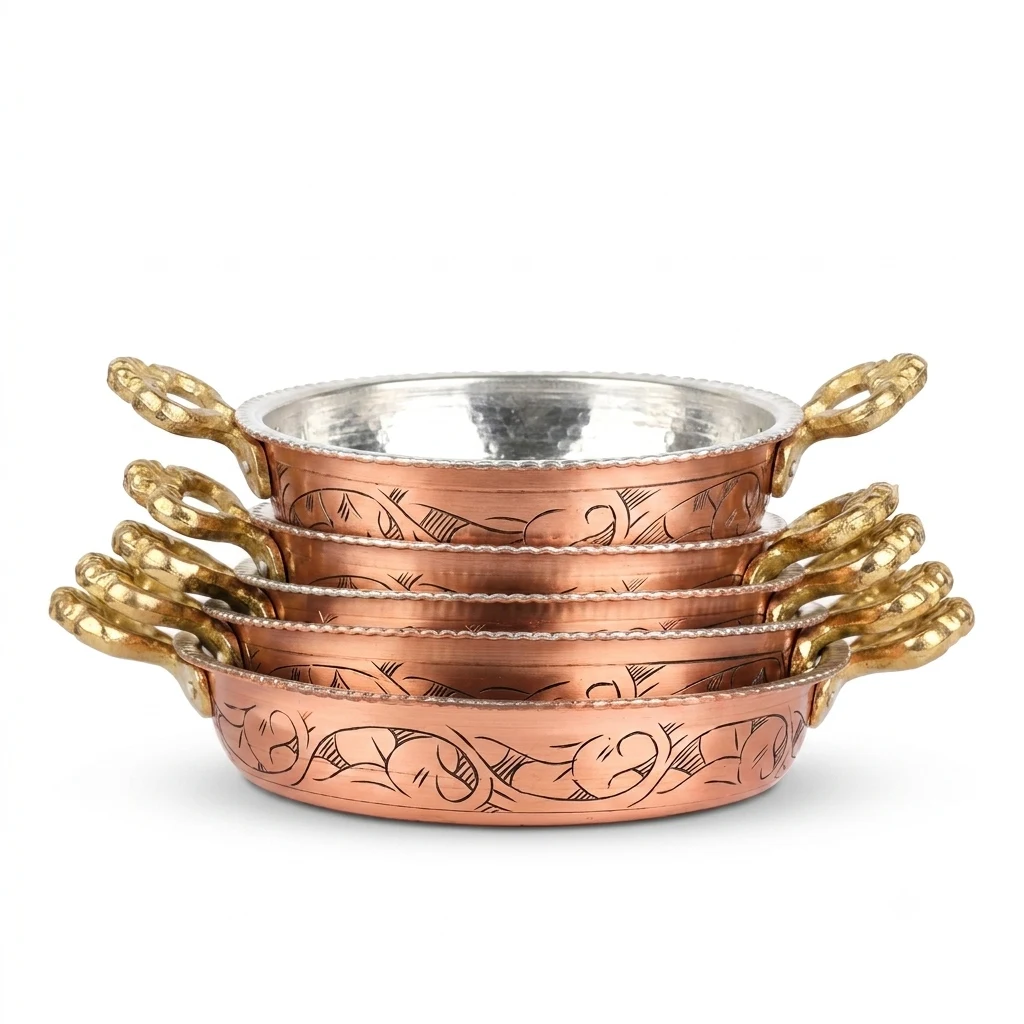
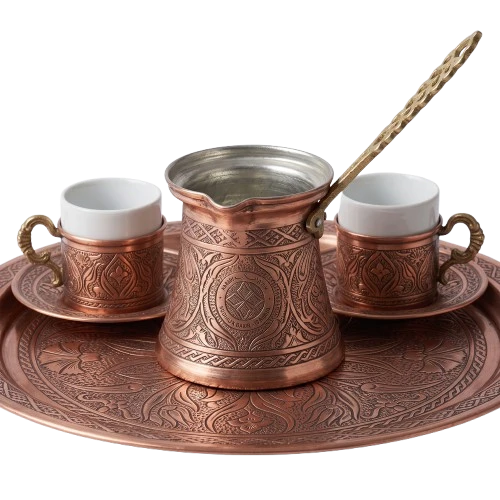
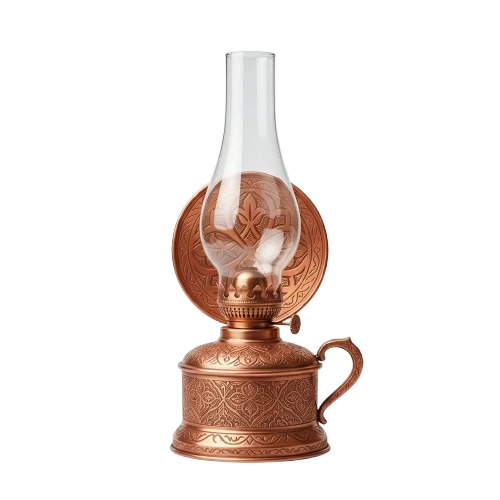
A copper set standing in a hotel breakfast room ages ten times faster than the same set at home. Three services a day, harsh detergent, staff in a hurry. Copper works in a business and it looks good on the table, but the buying decision has to be made with that load in mind.
How long the tin lasts
At home a tinned pan runs five or six years. In a restaurant kitchen the same pan loses its lining in 12 to 18 months. On the service side, trays and presentation dishes that never see direct heat, you get about three years. You can see it coming: orange copper starts showing through the silver grey in small spots.
Retinning is not expensive, but done without a plan it leaves you short of dishes mid service. The sensible pattern is once a year, out of season, sending half the stock and running on the other half. Tinning takes 5 to 7 days; allow two weeks with shipping. Buy with that cycle in mind, since roughly 10 percent spare stock covers whatever is away at the workshop.
The wash-up
Copper does not go in a commercial dishwasher. Alkaline detergent and water above 80 degrees dull the tin within a few cycles and finish it in three months. Telling the staff is not enough, you have to make it impossible: a separate sink position for copper, its own sponge, a sign on the wall. In a kitchen with high turnover a verbal instruction lasts about two months.
The hand-wash rule is short: warm water, liquid soap, soft sponge, then a cloth. Copper left wet stains, and those stains cost twice the time later.
Replacing pieces
Things get lost and dented in service. Ask at the outset whether the model will still be produced in a year. With handmade goods a second batch is never a perfect twin of the first, but worked from the same die and the same dimensions the difference does not read on a laid table. We keep the measurements of corporate orders on file, so a request for twelve more two years later is not a problem.
Sizes
- Presentation trays. 30 cm for a single cover, 40 cm for two, 25 cm for coffee and dessert. Anything from 50 cm up only makes sense on a buffet; loaded, it cannot be carried.
- Breakfast sets. Four small bowls of 6 to 8 cm per person around a 20 cm tray. Keep the bowls 3 cm deep, jam sits badly in a shallow one.
- Serving pans. 16 cm for a two person portion, 22 cm for four.
- Samovars. 5 litres for a 40 seat room, 8 to 10 litres for 100. On electric models heating runs around 6 minutes per litre.
Wall thickness
For hospitality, 1.2 mm is the floor. Trays carried all day and pots that go on flame should be 1.5 mm. Thin copper dents on the first drop, and a dented tray never sits flat again. Check the handles and feet too, riveted or soldered. Solder opens up under heavy use, rivets do not.