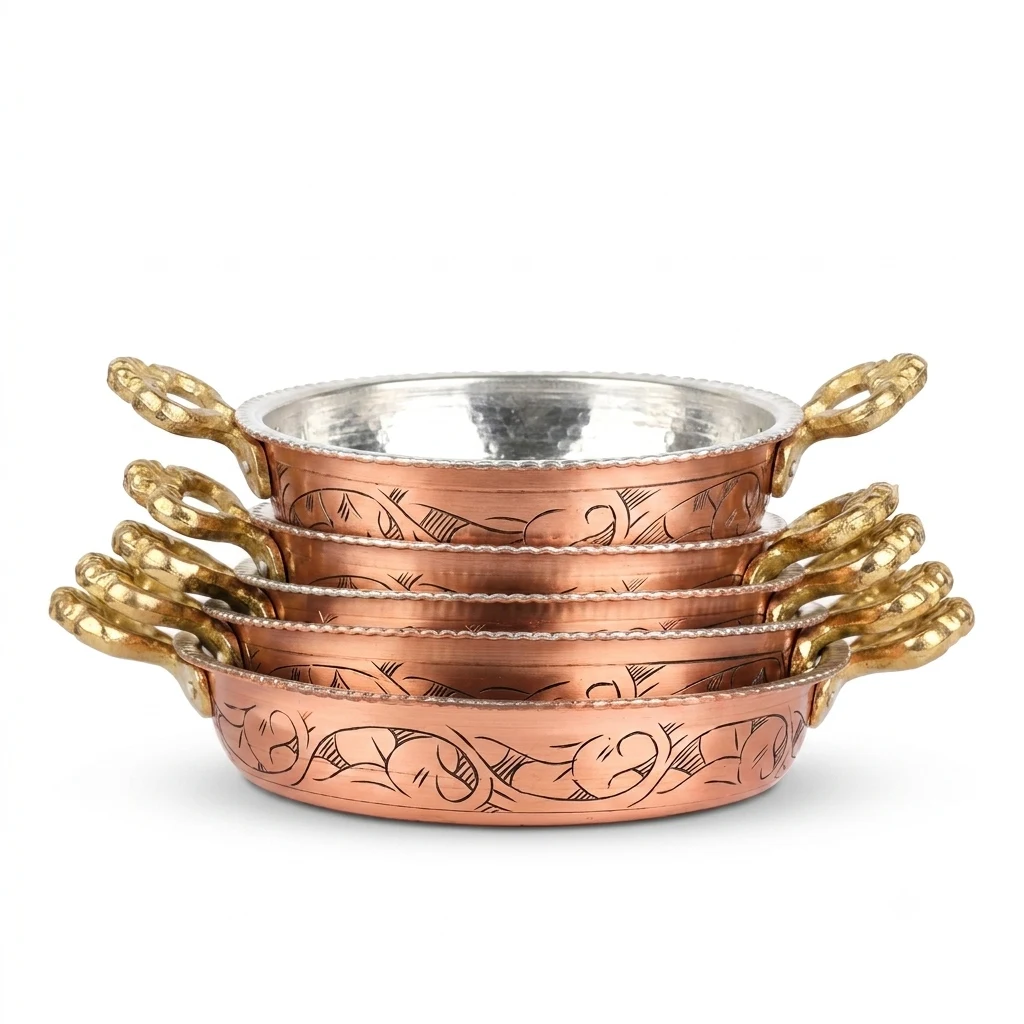
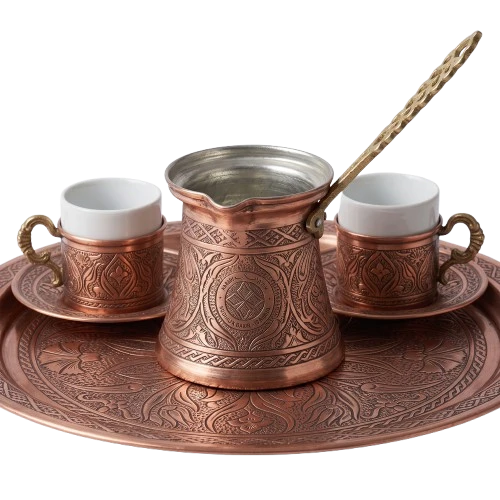
Not everything sold as copper is copper. Three impostors turn up again and again: steel painted a copper tone, brass with a thin electroplated copper skin, and aluminium anodised to the same colour. Behind glass all three pass. In your hands they take about two minutes to separate.
Magnet
Try a fridge magnet on it. Copper is not magnetic. If the magnet grips and stays, the piece is not copper; there is steel or iron underneath. If it falls off, you are not finished, because brass and aluminium are not magnetic either. The test is good for ruling things out, not for confirming.
Weight
Copper weighs 8.9 grams per cubic centimetre, aluminium 2.7. Take two trays of the same size and the copper one comes in three times heavier. A 30 cm tray in one-millimetre copper will not weigh under 600 grams. Heavier than you expected when you pick it up is a good sign. Feather light means aluminium.
Sound
Hold the piece on your fingertips and tap it with a nail. Copper gives a low, short, dull note that dies immediately. Aluminium sounds thin and tinny. Steel rings on and on. Judging one piece alone is hard; put two side by side and tap both, and the difference is obvious.
The scratch test
Pick a spot nobody sees, the edge of the base for instance, and scrape a small patch with the back of a knife or fine sandpaper. The colour underneath answers everything.
- Same reddish orange all the way down: solid copper.
- Yellow appearing: copper-plated brass.
- Silver grey appearing: steel, zinc or aluminium.
Plating is usually a few microns thick, about a tenth of a human hair. A fingernail can lift it. On solid copper you can scrape as long as you like and the colour never changes, because there is no other metal under it.
Plated versus solid
Copper plating means drawing a thin copper layer onto another metal by electrolysis; it is done for looks. Solid copper is cut from sheet, hammered, and riveted at the handle. Put a plated cezve on a flame and within a few months the plating is gone and the yellow or grey metal beneath shows through. Ask about thickness before you buy: kitchen copper normally runs between 0.8 and 1.5 mm. A seller who publishes neither weight nor gauge is usually working with thin sheet.
What the price tells you
Copper is an exchange-traded metal and its raw price is public. Since a kilo of copper sheet already costs what it costs, a finished pan of the same weight cannot sell below that, and labour, tin and freight sit on top. A handmade copper pan at half the price of comparable ones is either plated or made from paper-thin sheet. In copper, weight sets the price, not decoration.
Patina
This is the patient test: wait. Real copper darkens on its own in air, its red deepens within a few months, and in a damp kitchen it picks up a greenish bloom. If an unlacquered piece still shines like day one after a year, it is either not copper or it is under varnish. For a quicker check, squeeze a drop of lemon juice onto a darkened area and wipe after five minutes: real copper leaves a bright reddish spot, while plated or lacquered surfaces do nothing at all.