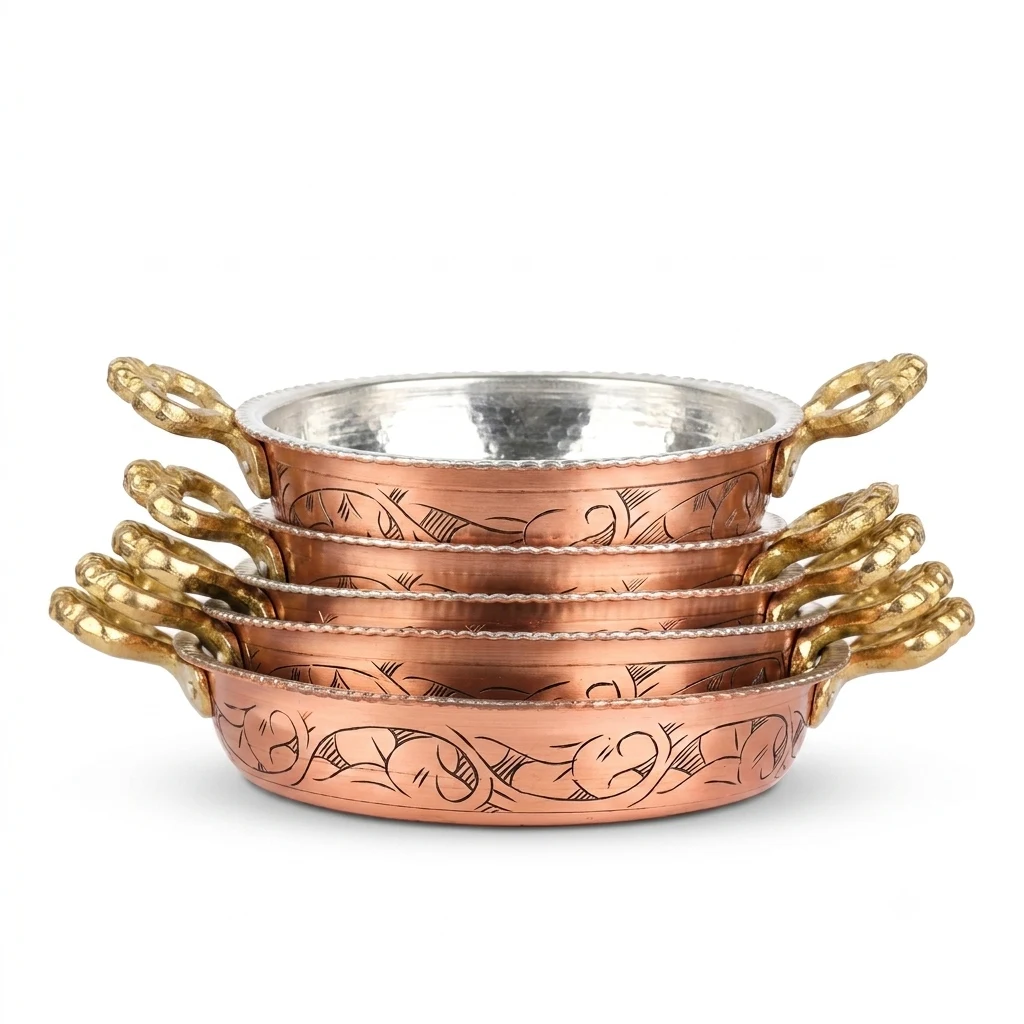
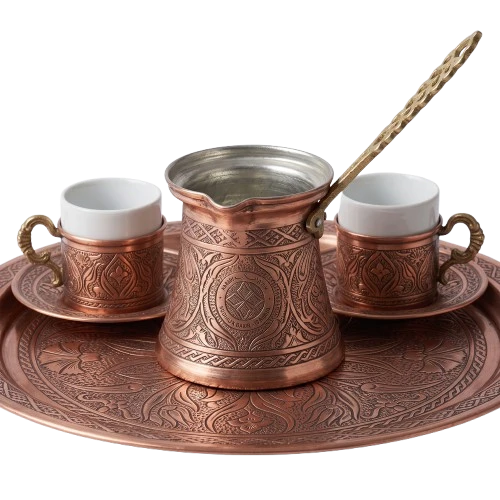
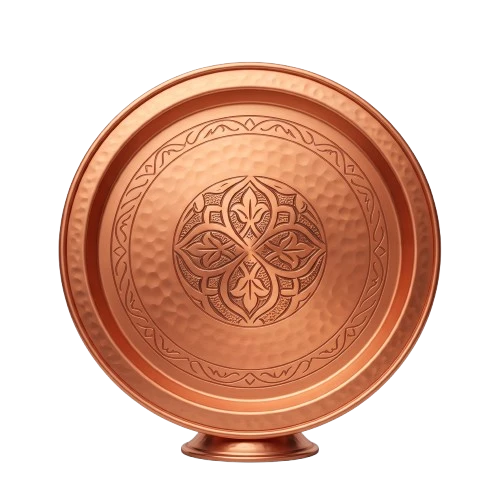
The first question people ask about a tray is how many centimetres across it is. The number alone means nothing; where the tray will sit decides the size. We make them from 20 cm up to 70 cm, and every size has its own job.
Where the diameter is measured
The figure on the label is taken from outer edge to outer edge, at the widest point. On trays with a rolled rim, that curl is part of the measurement, so the flat base inside a 40 cm tray usually comes to 35 or 36 cm. If it has to sit on a coffee table or slide onto a particular shelf, count those four or five centimetres. Oval and rectangular trays are quoted by the long side; ask for the second figure before you order.
Which size goes where
- 20 to 25 cm: serving and coffee. Turkish coffee, sweets, a single portion. This is the size most households reach for.
- 30 to 35 cm: breakfast and fruit. Two breakfast plates, tea glasses and cut fruit fit without crowding.
- 40 to 45 cm: full meals and the coffee table. A pot, two plates and a bread basket travel together, and the tray also works on its own as a table surface.
- 50 cm and above: buffets, rice and pastry service, and decorative trays hung on a wall. This is the size hotel breakfasts and weddings run on.
How many cups fit
Counting cups is the quickest way to settle the size. A 25 cm tray takes 4 cups with handles or 6 handleless cups in holders. A 35 cm tray carries 8 to 10 comfortably, with room for a sugar bowl. You can line up 14 to 16 on a 45 cm tray, but that load is hard to carry one handed; for a busy service two 35 cm trays beat one 45 cm tray. Leave a finger of space between cups or they knock together as you walk.
Rim height
Even trays that look flat have a rim of about a centimetre. If tea, soup or syrupy desserts are going on it, ask for a rim of 2 cm or more; the first time you stop short, whatever spills stays on the tray instead of on the table. For dry snacks and decorative use a low rim looks better and makes plates easier to lift off.
Rolled rim against cut edge
On a rolled rim the sheet is curled outward and closed onto itself. That curl does two things: it keeps your hand off the cut edge and it stiffens the tray, which is why a 45 cm tray with a rolled rim does not sag in the middle. A plain cut edge looks cleaner, but at that diameter you need to go up to 1.2 mm of copper. On hand hammered trays you will see a line of fine hammer marks running around the rim; those are struck to work harden the metal, not for decoration.
Footed stand or flat tray
A footed stand adds height to a table and frees up space, since another plate slides underneath. For biscuits, baklava and a cheese course it is the right choice. It is not made for carrying: the load on a single foot sways as you walk, and the edge of a stand is usually low. A flat tray carries, a footed stand displays. Do not trust the second one with tea from the kitchen to the sitting room.
Wall thickness and weight
For a decorative tray that will hang on a wall, 0.6 to 0.8 mm is enough; it carries nothing. For a serving tray that passes from hand to hand ask for 1 mm, and for hotels and restaurants do not go below 1.2 mm.
Weight is the easiest check on thickness. In 1 mm copper a 25 cm tray comes to 450 or 500 g, a 40 cm tray to 1.3 or 1.5 kg, and a 50 cm tray to around 2 kg. If the 40 cm tray in your hand weighs 800 g, the sheet is under 0.6 mm. On a wall that causes no trouble, but in daily service the centre slowly dishes.