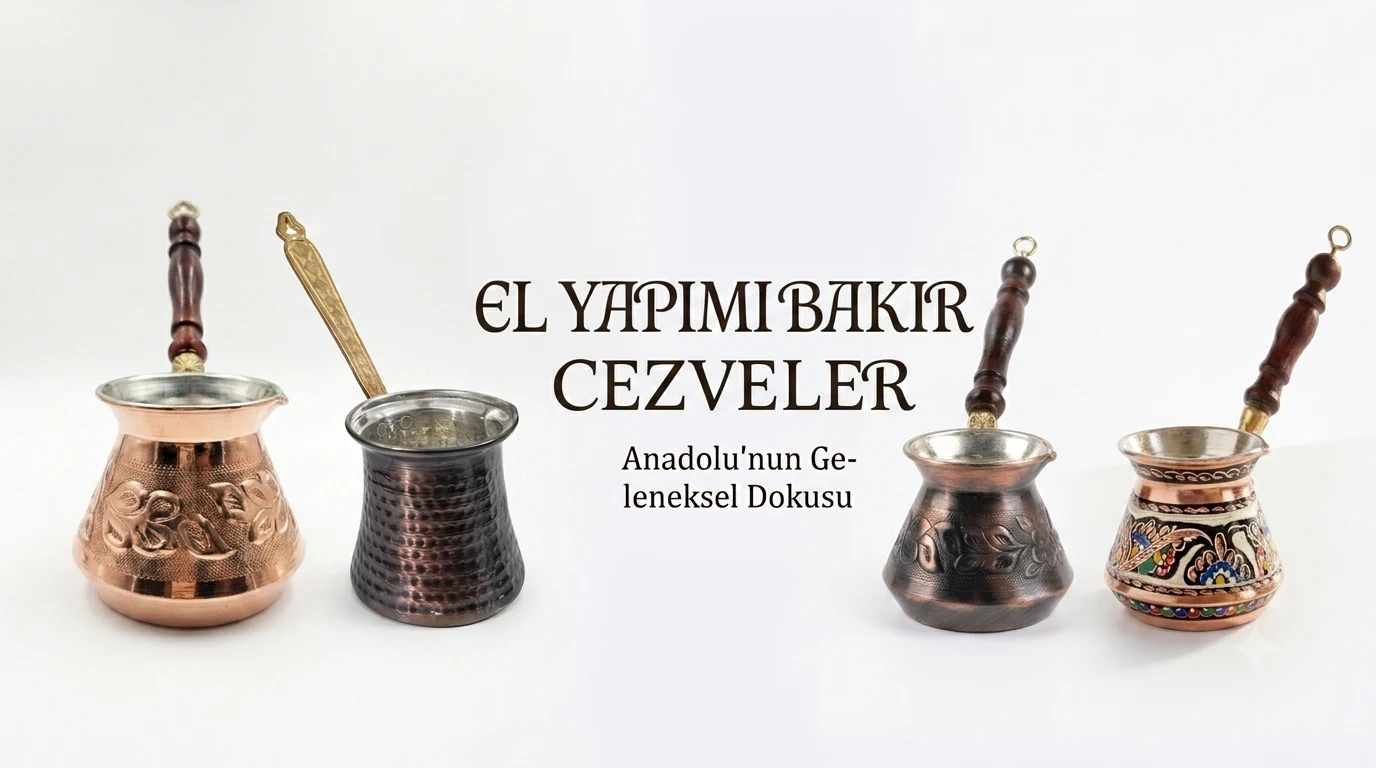
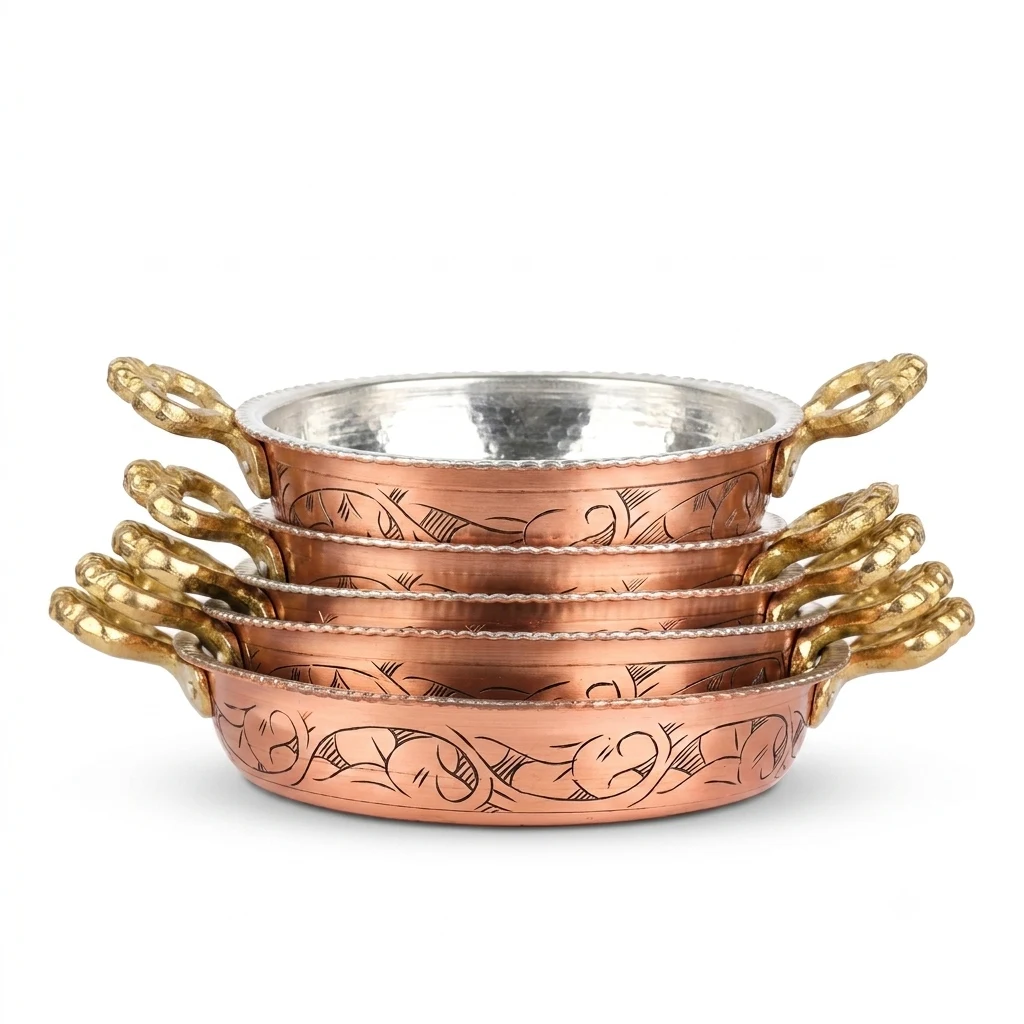
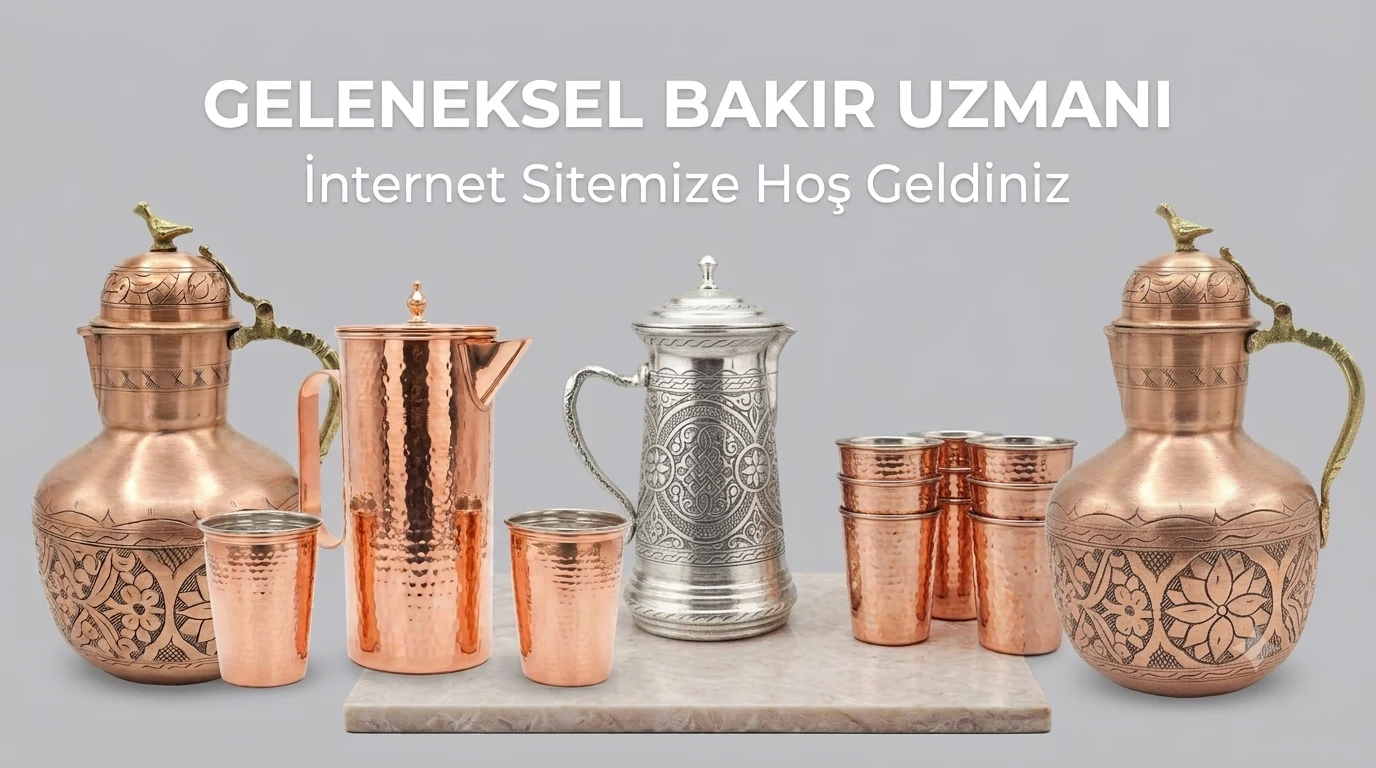
This is the question we get most often at the workshop. The answer splits in two: tin-lined copper goes in the oven, unlined decorative copper does not. The difference is that thin silver-grey layer on the inside.
Two hundred degrees is the limit
Tin melts at 232 C. You do not have to wait for melting, though; from around 220 C the lining softens and it can pool and ripple at the bottom of the pan. So with tin-lined copper we keep the oven at 200 C or below. At 180 C you have more room, and most dishes cook there anyway.
Baked pasta, casseroles, roasted vegetables, tray kebabs and milk puddings all work at 200 C. Recipes that want bread at 240 C, or a final blast of 230 C on a chicken, are not for copper; use steel or enamel for those.
Oven thermostats often run 10 to 20 degrees above the dial. If you are not sure about yours, an oven thermometer costs very little and will save a lined tray at least once.
Unlined trays stay out
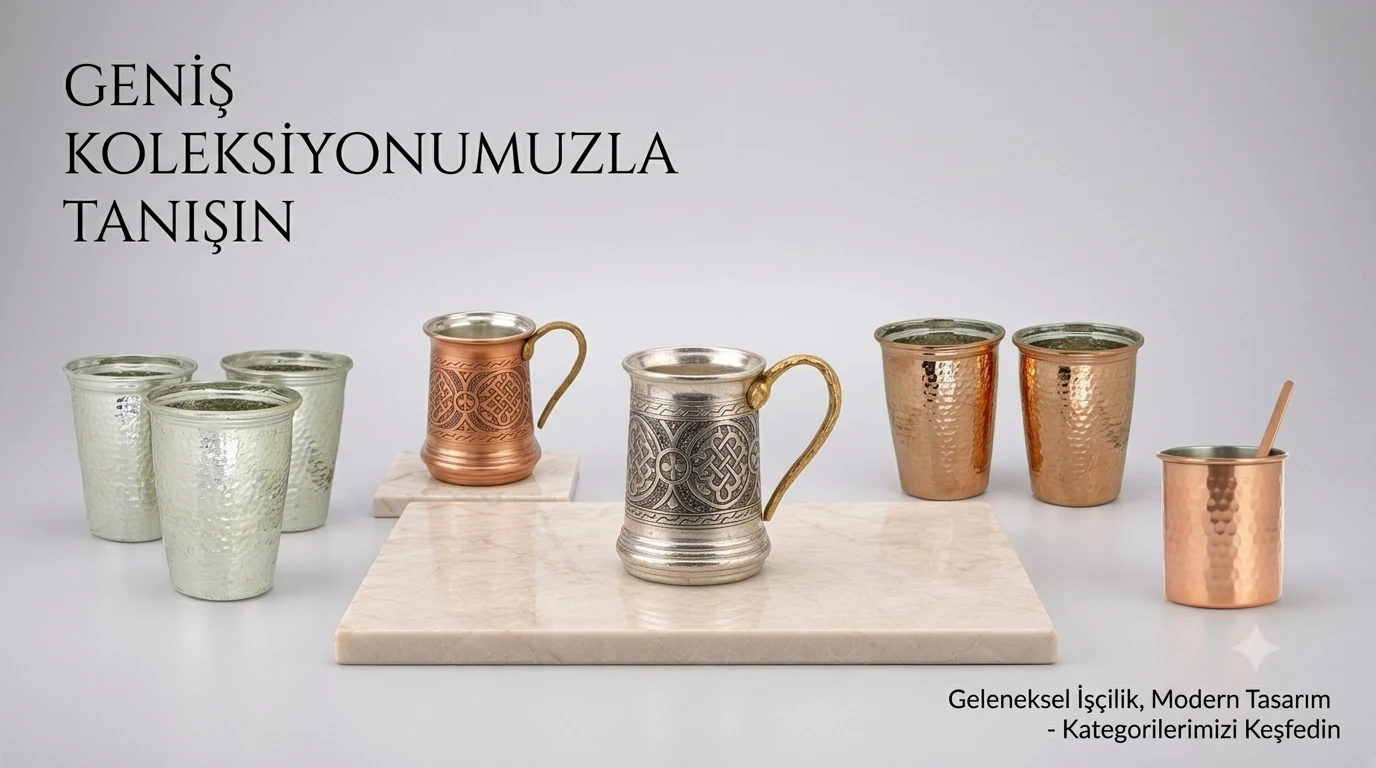
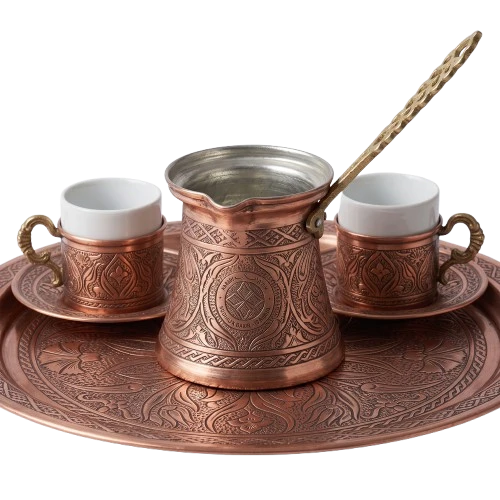
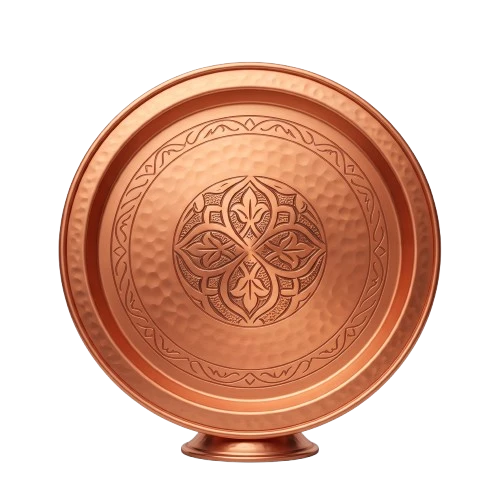
Serving trays, engraved gift pieces and hammered decorative plates are made without a lining. They are not meant for hot food, and certainly not for the oven.
Telling them apart is easy: if the inside is the same copper colour as the outside it is unlined; a matt silver surface means it is tinned.
There is also the question of joints. Handles and feet are soldered on, and soft solder starts to give between 220 and 250 C. We have seen a handle come off a tray inside an oven.
Never heat an empty pan
Copper conducts heat so quickly that an empty pan left on a high flame for two or three minutes will reach 300 C at the base. The tin dulls first, then blisters and flakes. With water, oil or food inside this does not happen; the liquid pulls the heat away and holds the temperature at boiling point. Put the oil in from the start rather than heating the pan first.
Sudden temperature changes
Do not set a hot tray on wet stone and do not run cold water over it. Copper expands more than steel, and a sharp cooling warps the base and opens hairline cracks in the tin. Let it sit on a dry surface for fifteen minutes, then wash it.
Which hobs work
- Gas. The best match. Keep the flame inside the diameter of the base; flames licking up the side heat the handle and leave soot on the outside.
- Electric and ceramic. No problem, as long as the base sits flat.
- Induction. Copper is not magnetic, so the hob will not even see the pan. You either buy a piece built with a steel disc in the base or put an induction adapter plate underneath. With an adapter the heating is slower and you lose part of what copper is good for.
The handle is always hot
A copper handle reaches the same temperature as the body, so a tray coming out of a 200 C oven has a 200 C handle. Use a thick cloth or a proper oven glove, not a thin pot holder. Even on wooden-handled pans the metal collar where the handle meets the body gets hot; do not grip it there.
If the tray goes straight to the table, put a wooden or cork mat under it. Glass tables and polished wood do not forgive a 200 C base.
Afterwards
Wash it once it has cooled, in warm water, and dry it right away. If food has stuck, soak it in warm water for half an hour; do not attack it with steel wool or a knife, because the tin is soft and underneath it you will expose bare copper.