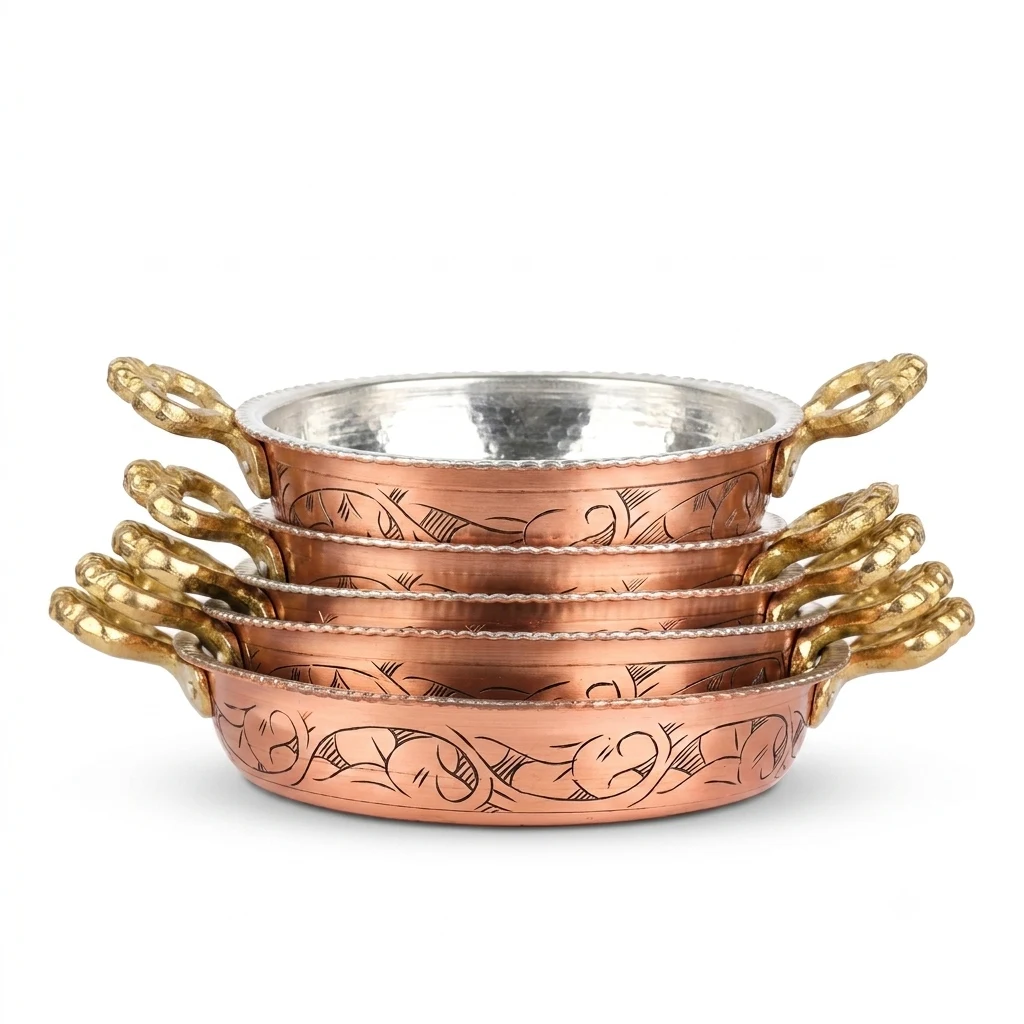
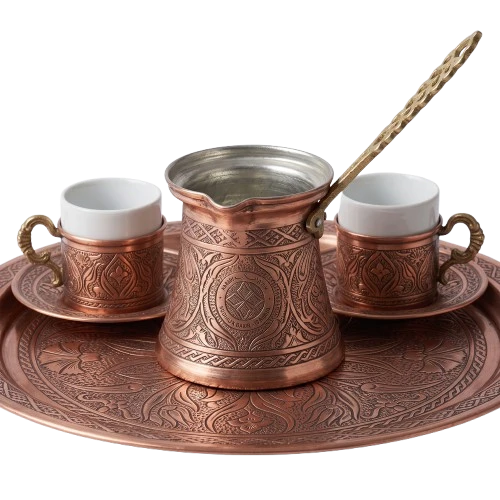
Copper darkens. That is the metal reacting with air, not a fault. A tray leaving our workshop shines like a mirror; six months later the same tray has turned a deep orange. Some people polish it back, others prefer that colour and leave it alone.
Before any method, separate two things in your mind: the outside of a piece and the inside that touches food. The interior is tin-lined, and tin is far softer than copper. Whatever you use on the outside will wear the tin away if you use it inside.
Everyday cleaning
Warm water and a soft sponge after use. Washing-up liquid is fine. What matters is drying it immediately. Leave copper wet and dark spots form where the droplets sat, and those spots are harder to remove than ordinary tarnish.
Keep it out of the dishwasher. The detergent is alkaline and the temperature high; together they kill the shine and eat the tin.
Home methods
For light tarnish three things work, and all three work the same way: acid dissolves the oxide layer.
- Lemon and salt. Pour coarse salt onto half a lemon and rub the surface directly. Fastest result of the three.
- Vinegar and salt. One tablespoon of salt in a cup of vinegar, applied with a cloth.
- Ketchup. It sounds odd, but the vinegar and tomato acid in it do the job. Spread a thin layer, wait ten minutes.
Whichever you use, rinse well and dry afterwards. Acid left on the surface keeps working and stains.
Commercial copper polish
Home methods will not shift deep, old patina. Copper polish contains both an abrasive and a protectant, gives an even result and does not scratch. Apply with a soft cloth and wipe before it dries.
Never use polish on the tin-lined interior. That surface is cleaned with soapy water, nothing more.
What to avoid
- Steel wool. Leaves permanent scratches, and on tin it strips the lining outright.
- Bleach and chlorine. Reacts with copper and leaves permanent greenish marks.
- Oven cleaner. Far too alkaline; it dulls the metal.
- Abrasive scouring powder. Invisible at first, but it leaves thousands of fine scratches and the piece never shines the same again.
Patinated pieces
Do not clean blue-green patinated or antiqued items. That finish was developed under control in the workshop; one pass with polish undoes weeks of work. Dust them with a dry microfibre cloth.
Keeping the shine
Decorative pieces in a cabinet need polishing two or three times a year. Kitchen pieces in daily use need none at all; drying them properly is enough, and the darkening settles into an even tone with use.
If you are storing a piece for a long time, wrap it in a dry cloth and keep it somewhere without damp. Avoid plastic bags, moisture condenses inside.