Copper is not a poison. It is a trace element the body needs: it helps iron reach the blood, builds connective tissue and maintains nerve sheaths. An adult needs roughly 0.9 milligrams a day, and hazelnuts, cocoa and pulses already supply it. The question was never copper itself, only how much of it.
Health authorities set the upper limit for adults at around 10 milligrams a day. Cross that and the first signs are nausea and stomach pain; keep crossing it and the liver carries the load. Ordinary eating rarely gets anywhere near. The shortcut that does is leaving acid alone with bare copper for hours.
What the tin lining is for
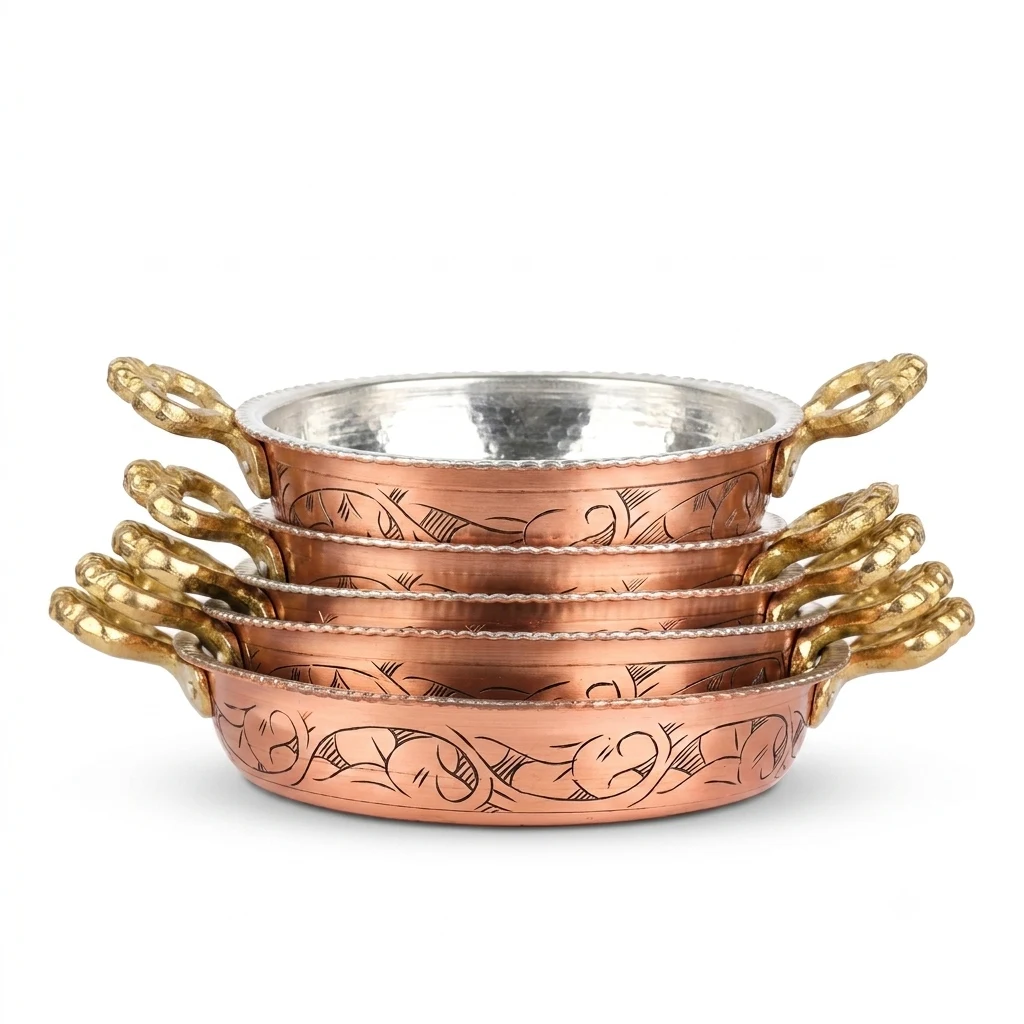
Acid dissolves the copper surface and the dissolved metal goes into the food. Simmering a pan of tomato sauce for hours in unlined copper adds milligrams of copper to the dish, and the taste suffers too: a sharp metallic edge appears. Tin sits in between and ends the contact; because it does not react itself, food and copper never meet. That is why copper vessels used with food must be tinned in Turkey.
Why acidic food must not sit in it
Dissolution scales with time. Stirring a sauce for two minutes and leaving it in the pan overnight are very different things, and the reaction carries on while the food cools. In an unlined pan, or one whose tin has worn through, do not let these stand:
- Lemon, vinegar, pomegranate molasses, tomato and tomato paste
- Pickle brine and salt cures
- Yoghurt, ayran, sourdough starters
- Fruit juice, wine, fizzy drinks
In a pan with sound tin, none of that list is a problem. If the tin has opened up, use the pan for neutral dishes only until it goes back to the tinsmith.
Keeping water in a copper jug
In Ayurvedic practice, water left overnight in a copper vessel is called tamra jal and drunk on an empty stomach in the morning. The idea behind it is copper's antimicrobial effect, which is measurable in a laboratory. The tradition comes with its own limits:
- Plain water only. Water with lemon squeezed into it is a different matter entirely; the acid dissolves copper quickly.
- Six to eight hours, not water that has stood in the jug for days.
- A glass or two a day, not drinking from the jug from morning to night.
- The inside must be clean. If you see greenish deposits, pour that water away and clean the jug with citric acid.
People with Wilson's disease, anyone with liver disease and infants are outside this practice altogether. Their bodies clear copper poorly and it accumulates.
When copper is safe
- A pan with sound tin lining: safe for any dish and any cooking method.
- Unlined copper: fine for decoration, dry snacks and cold water for short periods.
- A pan with worn tin: nothing acidic until it has been relined.
This is the question we hear most in the workshop, and the answer fits in one sentence: the problem is not copper, it is long contact between copper and acid. Tin ends that contact. Keep the lining in good order and cooking in a copper pan is no different from cooking in steel, with better heat spread on top.